
Hydrogen Future Industries Explained: Building a Lower-Cost Path to Green Hydrogen
Summary
• Hydrogen Future Industries focuses on cutting the cost of green hydrogen production
• Its system combines wind generation with high-performance electrolysis
• The goal is to make hydrogen viable for storage, heavy industry, and remote power
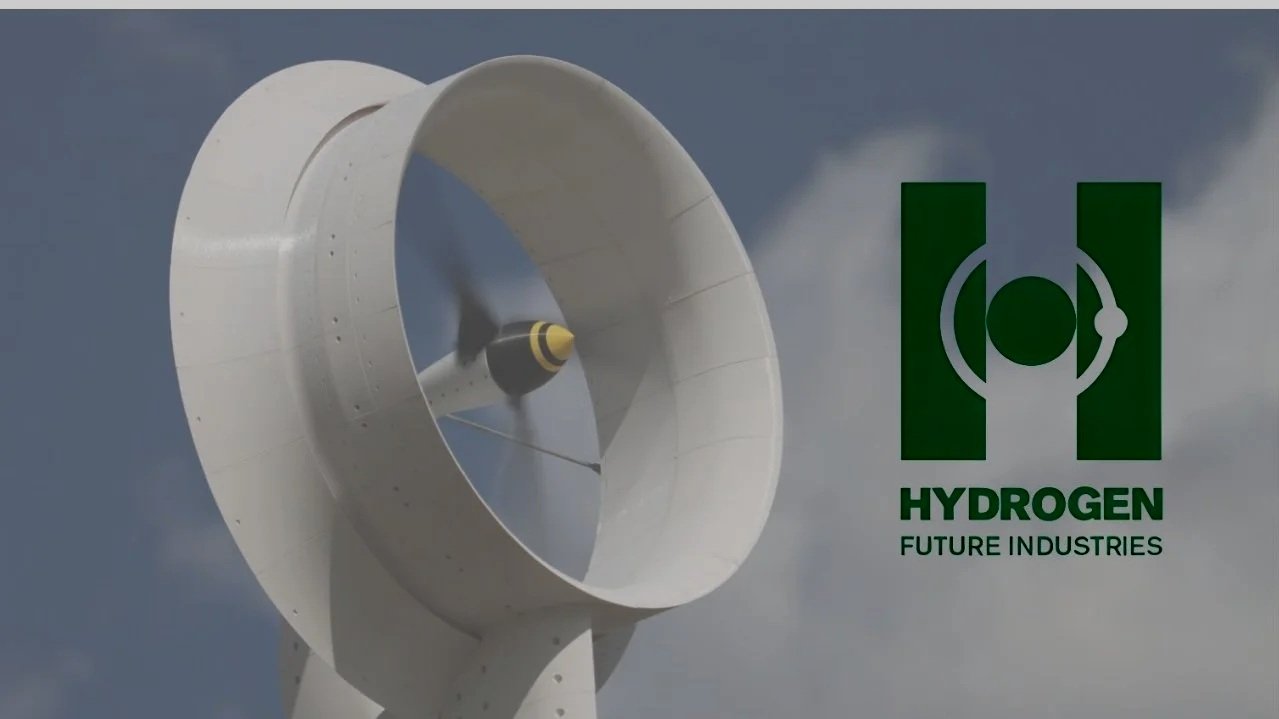
Hydrogen Future Industries backs technologies aimed at reducing the cost of hydrogen produced from renewable energy. The company also focuses on hydrogen energy storage as a lower-cost alternative to lithium-ion batteries.
At the centre of its strategy is an integrated system rather than standalone components. Hydrogen Future Industries is developing a highly efficient wind turbine paired directly with a high-performance electrolyser.
This design removes several inefficiencies found in traditional green hydrogen setups. By optimising generation and electrolysis together, the system aims to reduce overall energy losses.
The cost target is ambitious. Hydrogen Future Industries is working toward producing green hydrogen for under $2 per kilogram, a level widely seen as a tipping point for commercial adoption.
At that price, hydrogen becomes competitive across multiple sectors. A $2/kg hydrogen cost equates to roughly $0.06 to $0.10 per kilowatt hour, bringing it closer to conventional energy sources.
The motivation behind the model is practical rather than ideological. Hydrogen is widely recognised as essential for decarbonising sectors that electricity alone cannot reach.
Heavy industry, long-duration energy storage, and transport all require energy carriers that can scale. Hydrogen offers clean combustion and flexible storage, but only if the economics work.
One near-term commercial path is modular hydrogen power systems. These systems could supply off-grid and remote locations where grid access is limited or unreliable.
Potential use cases include mining, industrial operations, and EV charging hubs. In these environments, reliability and energy independence matter more than grid connection.

On a larger scale, Hydrogen Future Industries sees opportunity offshore. Wind-to-hydrogen hubs could convert offshore wind energy directly into hydrogen for storage, transport, or industrial use.
This approach bypasses grid congestion and transmission losses. It also allows renewable energy to be stored in chemical form for later use.
Execution remains the key challenge. Manufacturing, deployment, and scaling will determine whether the cost targets can be achieved in real-world conditions.
Hydrogen Future Industries is positioning itself at the intersection of renewables and storage. If it succeeds in lowering green hydrogen costs, it could unlock entirely new energy markets.